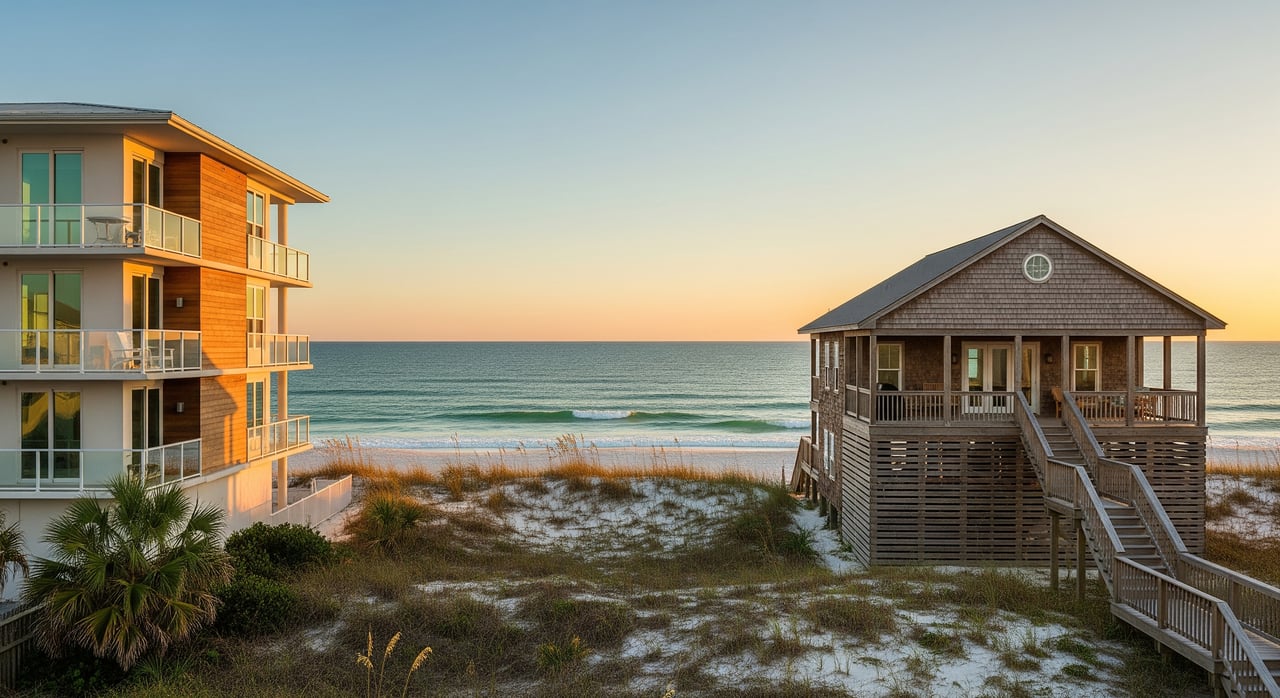
Trying to choose between a condo and a beach house in Gulf Shores? You are not alone. Both options offer beach access, rental potential, and a laid-back coastal lifestyle, but they work very differently when it comes to ownership, costs, and upkeep. In this guide, you will learn the key differences, what to budget for, how insurance and local rules come into play, and which option best fits your goals. Let’s dive in.
What you actually own
Condo basics
When you buy a condo, you own the interior of your unit and share ownership of common elements with other owners. The association typically maintains the exterior, roof, elevators, pools, parking, and landscaping. You pay monthly or quarterly HOA fees to fund operations, insurance for common areas, reserves, and routine maintenance.
This setup can be a strong fit if you want a turnkey lifestyle and easy “lock-and-leave” use. You do give up some control. Expect bylaws, rules, and possible limits on remodeling, pets, or short-term rentals. You should also plan for the possibility of special assessments if big repairs or upgrades are needed.
Beach house basics
A beach house usually means fee-simple ownership of the land and the structure. You control the exterior, yard, and systems like roofing, siding, HVAC, and utilities. There is more privacy and flexibility, and some buyers value appreciation tied to land ownership.
Full control also means full responsibility. You handle all maintenance, storm prep, and insurance. On the coast, that can mean higher ongoing costs for wind and flood coverage, plus more frequent exterior upkeep because of salt air.
Cost, financing, and insurance
Upfront price and monthly carry
Condos often have a lower entry price compared with beach houses in similar locations. You will still have recurring HOA fees, and those vary based on amenities and the building’s insurance coverage. Beach houses usually carry a higher purchase price and larger line items for exterior maintenance, landscaping, and repairs. You control the timing of those costs, but they are not optional.
When you budget, include the major items that affect carry in coastal Alabama: HOA fees or reserve contributions, property taxes, utilities, property management if you plan to rent, and premiums for flood and wind insurance.
Financing differences for condos
Many lenders require project-level reviews for condos. Factors like owner-occupancy, reserve funding, and litigation can affect loan approval. Some projects will not meet FHA or VA criteria. If you plan to use those programs, ask your lender early about project approval requirements. Investment loans, whether for a condo or a beach house, often require bigger down payments and stricter underwriting.
Insurance on the coast
Gulf Shores properties face wind and flood exposure. Lenders typically require hazard, wind, and flood coverage for mortgaged coastal homes. You can review flood insurance basics through the National Flood Insurance Program to understand how flood zones and building elevation affect premiums. Wind coverage often comes with higher deductibles near the coast, and improvements like impact-rated openings may reduce costs. For state-specific guidance, the Alabama Department of Insurance offers consumer resources on policy types and coastal coverage considerations.
- Learn about flood insurance through the National Flood Insurance Program: NFIP flood insurance overview
- Explore Alabama insurance consumer resources: Alabama Department of Insurance
Risk and rules in Gulf Shores
Flood and hurricane exposure
Storm surge, high winds, and coastal flooding are part of the Gulf Shores risk profile. Before you buy, get the property’s flood-zone determination and an elevation certificate if available. You can review official maps by address or coordinates using the FEMA Flood Map Service Center. These documents influence your insurability and premiums.
Short-term rental compliance
Gulf Shores regulates short-term rentals. Expect business licensing, sales and occupancy tax collection, and code compliance if you plan to rent. Rules can change, so verify current requirements with the City of Gulf Shores, and confirm whether any HOA or condo community has rental restrictions or guest registration rules.
Setbacks, erosion, and building codes
Beachfront and near-beach lots can be subject to setbacks, dune protections, and higher design standards for wind and flood. New construction and substantial repairs often must meet current coastal building codes and permitting rules. Start with the city’s building department to confirm what applies to your parcel on the City of Gulf Shores site. To understand long-term coastal forces like tides and sea-level trends, review NOAA coastal data as part of your risk planning.
Maintenance and lifestyle differences
Condo ownership experience
In a condo, the association handles exterior maintenance, common systems, and amenities. That means fewer service calls for you and a simpler experience if you are out of state. You will want to review the HOA budget, reserve study, and recent meeting minutes. Strong reserves can help avoid frequent special assessments. Be sure you are comfortable with rules related to pets, remodeling, noise, parking, and rentals.
Beach house ownership experience
With a single-family beach house, you control the plan and the pace of upkeep. Expect to budget for roof and siding care, corrosion from salt air, HVAC service, deck and railing maintenance, and landscaping. A storm plan matters. You will want a routine for shutters or impact protection, contractor contacts, and a plan for post-storm inspections and repairs.
Rental income and resale
Short-term rental potential
Condos near the beach with pools, elevators, and easy access often perform well since guests value convenience and amenities. Beach houses can command higher nightly rates, especially for larger homes, but they usually have higher operating costs. If you plan to rent, include management fees, cleaning, utilities, HOA costs, taxes, and insurance when you estimate net income. Seasonal swings are real. Peak demand runs late spring through summer, with softer shoulder seasons and winter.
Resale considerations
Your future buyer pool differs by product. Condo buyers often include investors and seasonal owners who value amenities and low maintenance. A well-funded association with clear reserves and minimal litigation risk supports resale pricing. For beach houses, buyers look closely at lot stability, access to the beach, flood and wind premiums, and recent maintenance. Elevation, flood history, and erosion risk can affect both marketability and price.
Which option fits your goals
- Choose a condo if you want low maintenance, strong on-site amenities, and a simpler lock-and-leave setup. You are comfortable with HOA rules and fees, and you value predictable exterior care.
- Choose a beach house if you want privacy, land ownership, design flexibility, and the potential for larger group rentals. You are ready for hands-on maintenance and direct control over repairs and upgrades.
- Not sure yet? Start with your budget, time commitment for upkeep, and your plan for personal use versus rental income. A quick side-by-side of costs, rules, and lifestyle can clarify the choice.
Your Gulf Shores buyer checklist
Use this list to structure your due diligence before you make an offer:
Property and title
- Title search, deed restrictions, easements
- For houses: current survey with setbacks and lot lines
- For condos: legal description and common-element percentage
Flood, hazard, and site-specific items
- FEMA flood-zone determination and elevation certificate if applicable
- Past flood or storm damage history
- Local shoreline position or erosion considerations
- Review FEMA flood maps and confirm NFIP eligibility via the NFIP overview
HOA and association (if applicable)
- CC&Rs, bylaws, rules, and recent meeting minutes
- Current budget, reserve study, and reserve balances
- Special assessment history and insurance carried by the association
- Rental policies, guest rules, and pet restrictions
Insurance and financing
- Multiple quotes for wind, flood, dwelling, and liability coverage
- Lender requirements for condos, including project approval
- Underwriting differences for investment properties
- Alabama-specific insurance guidance from the Alabama Department of Insurance
Regulatory and rental compliance
- Short-term rental licensing and occupancy tax registration with the City of Gulf Shores
- Any required safety or code inspections
- Zoning and permitted use for the parcel
Physical inspection
- Full home inspection including roof, structure, HVAC, electrical, plumbing
- Coastal-focused check for corrosion, wood rot, and moisture issues
- For condos: elevator condition, parking structures, and major building systems
Financial performance (for investors)
- Historical rental income and occupancy if available
- Complete expense review including management, utilities, HOA, taxes, and insurance
- Comparable rental rates for peak and off-peak seasons
Ready to compare specific properties and run true carry numbers side by side? You can get local insight, rental guidance, and a hands-on plan for due diligence with CoateConnection.
FAQs
What costs make condos vs beach houses differ in Gulf Shores?
- Condos often have lower purchase prices but include HOA fees and potential assessments, while beach houses usually cost more upfront and require owners to cover all exterior maintenance and higher wind and flood insurance.
How does flood insurance work for Gulf Shores coastal homes?
- Lenders often require flood coverage in higher-risk zones, with premiums based on flood maps and elevation; review your property’s risk through the FEMA Flood Map Service Center and the NFIP overview.
Are short-term rentals allowed for condos and houses in Gulf Shores?
- Many are allowed, but you must comply with city licensing and taxes, and some HOAs or condo associations restrict rentals; verify current rules with the City of Gulf Shores and your community documents.
What should I check in a condo association before buying?
- Review the budget, reserves, recent meeting minutes, insurance policies, assessment history, and rental or pet rules because these factors influence both monthly carry and future resale.
Do coastal building codes affect remodels or new construction?
- Yes. Beach-area projects often require permits and must meet current wind and flood standards with setbacks in place; confirm requirements with Gulf Shores’ building department and consider NOAA coastal data for long-term planning.