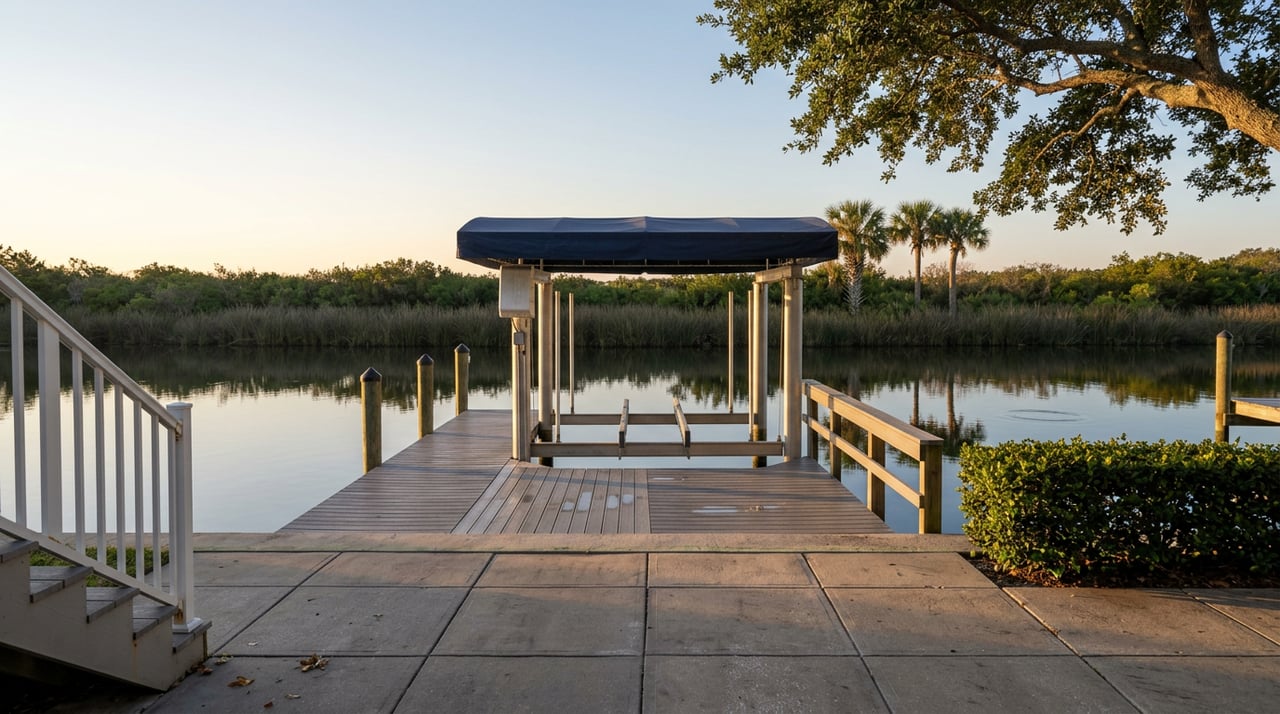
Ask a visitor when fishing season winds down in Orange Beach and they'll probably say Labor Day. Ask someone who keeps a boat at Sportsman Marina or Hudson Marina and they'll tell you that's when it starts getting good. This year the calendar backs them up in a way it hasn't in a while.
Three things happened between May and September of 2026 that changed the shape of the season for anyone who fishes here regularly, not just the charter traffic. The state rewrote how many days a week private boats can keep red snapper. A 408-foot former riverboat casino went to the bottom of the Gulf 23 nautical miles south of town. And the club that runs the area's best-known amateur tournament scheduled it for the exact week the tourist crowds thin out. None of these are related on paper. Together they explain why the "real" season here runs later, and looks different, than the postcard version.
The Season Alabama Rewrote After Falling Short
For years, Alabama's private-angler red snapper season ran on a set number of days, mostly weekends, dictated well in advance. In 2025, that schedule produced an estimated harvest of 623,029 pounds against a quota built to allow more. The state came in roughly 40,000 pounds short of what boats were actually permitted to take, largely because good weather didn't always line up with the days the season allowed people on the water.
Alabama's Marine Resources Division noticed the same problem building mid-season in 2025 and switched to a seven-day-a-week format starting that September just to use up the remaining quota before the year closed. For 2026, they didn't wait to make that adjustment. The state opened the private and state-licensed charter season on May 22 as a full seven-day-a-week run that continues until the 664,552-pound quota is met or the year ends, according to the City of Orange Beach's official announcement.
That single change rearranges a lot of small local habits. Boat traffic at the Perdido Pass channel spreads across the whole week instead of clustering on Saturdays. Marina parking that used to be predictable on weekdays isn't anymore. And the season has room to run well past what most visitors assume is the cutoff, since nothing forces it to stop at a fixed date the way older formats did. Locals who fish here know the practical version: if the weather's good on a Tuesday in October, that Tuesday counts now in a way it never used to.
Triggerfish Came Back Right on Schedule
Gray triggerfish followed its own separate track this year, closing after its spring window and then reopening for federal for-hire boats on August 1, according to multiple captains posting from Orange Beach and Pensacola Beach docks this month. Combined with red snapper still open under the new seven-day format, boats working the reef structure south of Perdido Pass this August have had two marquee species available at once, something that doesn't happen every summer depending on how the federal calendar falls.
For anyone who fishes casually rather than chartering, this is the kind of detail that only shows up in dock conversation and trip reports, not in the tourism brochures that treat "summer" as one undifferentiated block. The overlap this year is short. It's also exactly the kind of window locals plan weekends around.
A Reef Built From a Casino Boat
The bigger structural change to the local fishing map happened on July 1, when the state sank the Argosy VI, a four-story barge that spent years as a floating casino on the Ohio River in Indiana before closing in 2009. The Alabama Department of Conservation and Natural Resources purchased the vessel, stripped it of slot machines and hydrocarbons, and placed it 23 nautical miles south of Orange Beach in 122 feet of water, with the top of the structure resting about 60 feet below the surface.
It's not an isolated addition. The Argosy VI sits roughly two and a half miles from the New Venture and within seven miles of the LuLu, two wrecks that have anchored the area's dive and bottom-fishing routes for years. Alabama's Marine Resources Division frames these additions as a response to geology rather than novelty: the state has almost no natural hard bottom in this part of the Gulf, which is exactly why it built the largest artificial reef program in the country, more than 1,100 square miles of deployed structure, concentrated in what's now called the Dr. Robert (Bob) Shipp Alabama Artificial Reef Zone, a 364-square-mile stretch south of the coast.
As Marine Insight reported, Kevin Newton, who works with the state's reef program, put the logic plainly when the boat went down.
"It's a matter of producing more reef fish where you didn't have any fish. Without these artificial reefs, the fish would not exist."
For someone who already runs a boat out of Orange Beach, that's not an abstraction. It's a new waypoint sitting close enough to two known destinations that a normal offshore trip can now work all three in a single day. The reef didn't get added because the fishing was bad. It got added because that's simply how this stretch of the Gulf keeps its fishery alive, one deliberately placed structure at a time. Anyone who's fished here more than a season or two has watched the reef list grow this way before.
The Tournament That Marks the Turn
If there's a date on the local calendar that signals the season has shifted from tourist season to resident season, it's the Kenny Vines Memorial Tournament. The Orange Beach Sportfishing Club runs it every September, and this year it lands on September 11 and 12 at Tacky Jack's Downstairs, a waterfront spot on the Intracoastal Waterway that's hosted the event for years.
A mandatory captain's meeting runs Friday evening from 4 to 7 p.m., and boats compete Saturday across categories that have included swordfish, tuna, wahoo, and dolphin in past years, with a separate division for junior anglers. Entry runs $350 per boat for teams that register before September 9, according to details posted by the Orange Beach Sportfishing Club.
The tournament honors Kenny Vines, who ran KV Yacht Brokerage out of Orange Beach for more than three decades and helped found both the Elberta Sausage Festival and the Orange Beach Seafood Festival before his death in 2011. It's a community event as much as a competition, the kind where families come out for the weigh-ins and awards party regardless of whether they have a boat entered. Scheduling it for the second week of September, after school starts back and most vacation rentals have turned over for the fall, is itself a small local statement about who this weekend is actually for.
What This Adds Up To
None of these three threads is remarkable by itself. A season structure change, a new reef, a September tournament date. Put together, they describe a place where the working fishing season doesn't taper off after the summer crowds leave, it reorganizes around them leaving. The seven-day snapper format rewards the exact weekday flexibility that residents have and visitors usually don't. The new reef gives local boats another reason to run offshore into the fall rather than fewer. And the marquee tournament is scheduled for the week the marinas quiet down, not the week they're busiest.
That's the version of the season that doesn't make it into the vacation guides, because it isn't built for visitors. It's built around the people who are still here in October, still checking the tide charts, still deciding on a Tuesday morning whether the Gulf looks fishable.
If you're weighing what it actually means to own along this stretch of the coast, from dock access to how a property fits into a season that runs longer than most people assume, Coate Connection spends as much time on the water and in these neighborhoods as we do at the closing table. Schedule a free consultation with David and Virginia Coate to talk through what a home here really offers, season after season.
This article is general information, not legal, tax or financial advice. Consult a qualified professional about your situation.