Dreaming about a place where your weekends start with salt air and end with sunset views? Buying a Gulf Shores beach house as a second home can be exciting, but it also comes with coastal rules, tax differences, and rental decisions that can shape your costs long after closing. If you want a clearer path to the right property, this guide will help you focus on what matters most before you tour homes. Let’s dive in.
Start With Your Ownership Plan
Before you compare floor plans or beach access, decide how you want to use the home. In Gulf Shores, your plan for personal use versus rental use affects more than your lifestyle. It can also affect tax treatment, licensing, and ongoing responsibilities.
A true second home that you do not rent is treated differently from a property that is rented. Baldwin County states that a second home that is not rented is generally treated as Class III property, while rental property is Class II. The county also states that second-home owners are not eligible for a homestead exemption.
One detail catches many buyers off guard. If a property is rented even one day during the year, Baldwin County treats it as rental property for the whole year for tax classification purposes. That makes your rental strategy something to settle early, not after you close.
Personal Use Only
If you want a beach house strictly for your own getaways, your search can stay focused on comfort, layout, storage, and ease of maintenance. You may care less about turnover logistics and more about features that support relaxed coastal living. That can make the process feel simpler.
You should still pay close attention to flood zone, elevation, and future repair costs. Those factors matter whether you rent the home or not. In a coastal market like Gulf Shores, they are part of smart second-home ownership.
Occasional or Short-Term Rental Use
If you want the option to earn income, even part time, you need to plan carefully. Gulf Shores requires short-term rental owners in the city and police jurisdiction to go through a rental-license process. The city also requires a local emergency contact and a rental safety inspection every three years, along with zoning review and other department review where applicable.
Short-term rental owners also need to account for lodging tax. In Gulf Shores corporate limits, the total lodging tax rate is 16 percent. In the police jurisdiction, the total is 11 percent.
Long-Term Lease Use
If you are considering longer leases instead of vacation rentals, Gulf Shores draws an important line at 180 days. The city states that a single-unit long-term lease of 180 days or more is exempt from the annual rental-license requirement. That threshold can be useful if you want more flexibility without the same short-term rental setup.
Understand What a Gulf Shores Beach House Often Looks Like
Gulf Shores is not a market where every beach house sits low to the ground. Because of coastal floodplain conditions, local building code and flood rules strongly influence how homes are built. The city adopted the 2024 International Building and Residential Codes effective July 1, 2024, and its flood rules require elevated construction in VE and AE zones.
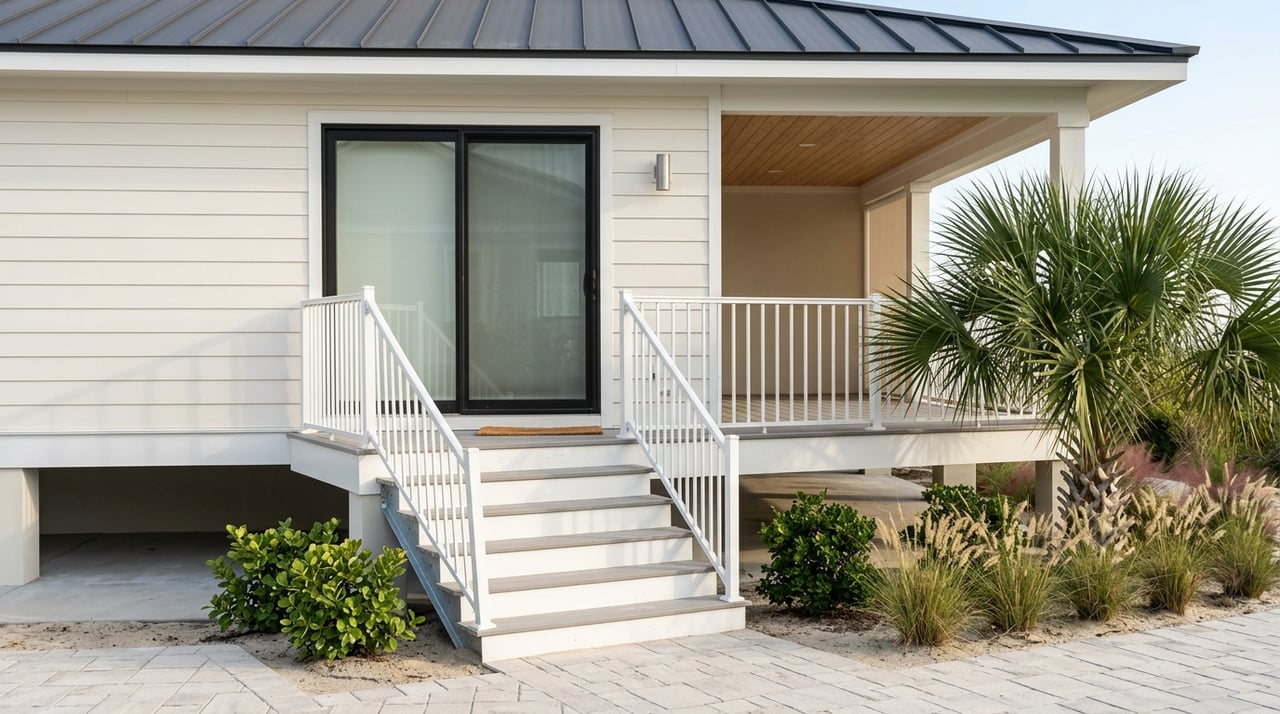
That is why many beach houses in the area are raised rather than built slab-on-grade. In practical terms, you will often see parking, stairs, storage, or other non-habitable space below the main living area. If you are coming from an inland market, this can feel like a big change at first.
This design affects more than appearance. It can influence how you think about convenience, carrying groceries, storage, storm preparation, insurance, and future remodeling. A home that looks perfect in photos may function differently in day-to-day use than you expect.
Beach House or Condo Alternative?
Gulf Shores officially separates beach houses from condos in its destination inventory, and the city taxes short-term house, condo, and duplex rentals under the same lodging-tax framework. For second-home buyers, that usually means one of the first big decisions is property type. You may be deciding between a detached beach house, a lower-maintenance condo alternative, or a duplex-style property with stronger rental intent.
A beach house may offer more privacy, more room, and more flexibility in how you use the property. At the same time, it can come with more maintenance and more hands-on ownership decisions. That tradeoff matters if you live out of town and plan to use the property only part of the year.
Budget for the Real Ownership Costs
The purchase price is only the start of the financial picture. In Gulf Shores, second-home buyers should build a budget that includes property taxes, possible lodging tax, licensing costs if renting, and flood insurance. If you plan to update the home later, permit and compliance costs matter too.
Property Taxes in Baldwin County
Alabama property tax is based on assessed value, millage, and exemptions. Baldwin County states that a second home that is not rented is treated as Class III, assessed at 10 percent, while rental property is Class II, assessed at 20 percent. The county also states that second-home owners are not eligible for homestead exemption.
Timing matters here as well. The Alabama Department of Revenue states that property taxes are due October 1 and become delinquent after December 31. If you are buying late in the year, make sure you understand how taxes will be handled at closing and after.
Lodging Tax for Short-Term Rentals
If you plan to rent the home short-term, Gulf Shores adds another cost layer through lodging tax. In the city’s corporate limits, the total rate is 16 percent, made up of 4 percent state, 2 percent county, and 10 percent city. In the police jurisdiction, the total rate is 11 percent.
This is one of the reasons you should confirm exactly where a property sits before making an offer. A home in the corporate limits and a home in the police jurisdiction may look similar on paper, but the tax setup for short-term rental use is not the same.
Rental License and Local Requirements
Gulf Shores requires owners who rent in the city or police jurisdiction to file a business license application. Short-term rentals have a $45 rental fee. Business licenses expire December 31, renewals are due January 1, and renewals are delinquent after January 31.
The city also requires a local emergency contact, rental safety inspections every three years, and zoning review. If you plan to hire a management company, you should confirm who is collecting and remitting lodging tax. That step is especially important for absentee owners who want fewer day-to-day surprises.
Flood Insurance and Flood Risk
Flood insurance deserves early attention, not last-minute attention. FEMA states that NFIP requirements apply in Special Flood Hazard Areas shown on FEMA flood insurance rate maps. Flood insurance may be mandatory in some NFIP communities when the mortgage is government-backed or federally regulated.
Just as important, standard homeowners insurance policies typically do not cover flooding. Premiums can depend on where the property is built and how it is built. In a market like Gulf Shores, flood zone and elevation are not side notes. They are central to your ownership costs.
Ask These Questions Before You Tour Homes
A smart second-home search in Gulf Shores starts with a short list of practical questions. These questions can help you avoid touring homes that do not fit your goals or budget.
Is This Truly a Second Home?
Decide whether you will use the home only for yourself or rent it at all during the year. In Baldwin County, that answer affects tax classification. It is one of the most important early decisions you can make.
Is the Property in City Limits?
Ask whether the home is in Gulf Shores corporate limits or only in the police jurisdiction. Lodging-tax totals differ between those two locations. If rental income is part of your plan, this can affect your long-term math.
What Flood Zone Is It In?
Ask what flood zone applies to the property and whether an elevation certificate is available. Gulf Shores points buyers to FEMA flood maps and states that it maintains elevation certificates for structures built from 1998 to the present. That information can help you better understand insurance and compliance.
Has the Home Been Damaged or Rebuilt?
Ask whether the home has ever been rented, damaged, or substantially rebuilt. Gulf Shores states that some major damage or major improvements may be treated as new construction. That can trigger current code and elevation requirements.
Who Will Handle Rental Obligations?
If you plan to rent, ask who will collect lodging tax, maintain the local emergency contact, and handle inspections and license-related tasks. Gulf Shores makes these part of the rental-license process. For out-of-town buyers, this is a major part of the ownership experience.
What Happens If You Remodel Later?
If you think you may renovate after closing, ask about permit and flood-compliance costs before you buy. The city requires flood-zone documentation and elevation-related paperwork for certain projects. Some major improvements can be treated much differently than buyers expect.
Why Early Planning Matters in Gulf Shores
In many markets, buyers can sort out taxes and rental logistics later. In Gulf Shores, those details help define the right property from the beginning. Your ownership plan, flood considerations, and location within city limits or the police jurisdiction all shape what a beach house will really cost and how easy it will be to use.
That is why the best second-home search usually starts with strategy, not just listings. When you align your personal-use goals, rental intentions, and comfort with coastal ownership early, it becomes much easier to narrow the field and move with confidence.
Whether you want a private coastal retreat, a part-time vacation rental, or a beach house that gives you future flexibility, local guidance can save you time and help you avoid costly assumptions. If you want help sorting through Gulf Shores beach houses with a practical, data-driven approach, connect with CoateConnection.
FAQs
What should you decide first when buying a Gulf Shores beach house as a second home?
- You should decide whether the home will be for personal use only, occasional rental, or rental-first ownership, because that choice can affect taxes, licensing, and ongoing responsibilities.
How are second homes taxed in Baldwin County?
- Baldwin County states that a second home that is not rented is generally treated as Class III property, while rental property is Class II, and second-home owners are not eligible for a homestead exemption.
What happens if you rent out your Gulf Shores second home for only a few days?
- Baldwin County states that if a property is rented even one day during the year, it is treated as rental property for the whole year for tax classification purposes.
Do short-term rentals in Gulf Shores need a license?
- Yes, Gulf Shores requires short-term rental owners in the city or police jurisdiction to file a business license application and comply with local rental-license requirements.
When is a Gulf Shores long-term lease exempt from the annual rental license?
- Gulf Shores states that a single-unit long-term lease of 180 days or more is exempt from the annual rental-license requirement.
Why are many Gulf Shores beach houses elevated?
- Gulf Shores flood rules require elevated construction in VE and AE zones, which commonly leads to raised homes with non-habitable space below the main living area.
What flood insurance issue should Gulf Shores second-home buyers know?
- Flooding is typically not covered by standard homeowners insurance, and flood insurance requirements and premiums can depend on flood zone, mortgage type, and how the home is built.
What should you ask about before remodeling a Gulf Shores beach house?
- You should ask about permits, flood-zone documentation, elevation-related paperwork, and whether planned improvements could trigger current code or new-construction-style compliance requirements.