The housing market is changing, and both buyers and sellers are beginning to feel the difference.
After years of rising home prices, limited inventory, and intense competition, the U.S. housing market is showing signs of a slowdown. More homes are available for sale, price growth is cooling, and higher mortgage rates are causing some buyers to reconsider their timing.
But does that mean home prices are about to fall? Are buyers finally gaining an advantage? And what does all of this mean for homeowners along the Alabama and Florida Gulf Coast?
According to the latest November 2026 housing market report from RE/MAX, the market isn't experiencing a dramatic collapse. Instead, it's going through a period of adjustment, creating new challenges and opportunities depending on which side of the transaction you're on.
Here's what the latest numbers reveal and what they could mean for buyers and sellers in Gulf Shores, Orange Beach, Foley, Pensacola, Perdido Key, and surrounding communities.
A Look at the U.S. Housing Market in November 2026
The latest national housing statistics paint a picture of a market that's slowing down but continuing to move forward.
According to data highlighted in the November 12 RE/MAX report:
Housing Market Indicator | Latest National Data |
|---|---|
Median existing-home price | $417,500 |
Annual home price change | +1.3% |
Average 30-year mortgage rate | 7.18% |
Existing-home sales | 3.99 million annualized |
Existing homes available for sale | 1.60 million |
Annual increase in active listings | +7.4% |
Listings with price reductions | 20.5% |
Figures reflect the latest available reporting periods, primarily September through November 2026.
At first glance, these numbers may seem contradictory.
Home prices are still increasing nationally, yet more sellers are reducing their asking prices. Inventory is improving, but home sales remain relatively slow.
The explanation is simple: the market is becoming more selective.
Buyers have more choices than they did during the height of the housing boom, but affordability remains a challenge. Sellers, meanwhile, are learning that simply putting a home on the market doesn't guarantee a quick sale.
Mortgage Rates Remain a Major Factor for Buyers
Mortgage rates continue to influence the decisions buyers are making.
According to Freddie Mac, the average 30-year fixed mortgage rate was 7.18% as of November 5, 2026, compared with 6.22% one year earlier.
While rates have experienced modest weekly declines, they remain high enough to affect purchasing power.
To understand why this matters, consider a buyer financing a $334,000 mortgage over 30 years.
At a 6.22% interest rate, the monthly principal and interest payment would be approximately $2,050.
At 7.18%, that payment increases to approximately $2,263.
That's a difference of $213 per month, or more than $2,500 annually, before property taxes, homeowners insurance, and other expenses.
For buyers considering coastal properties, those additional expenses are particularly important.
Insurance premiums, potential flood insurance requirements, homeowners association fees, and condominium assessments can significantly affect the true cost of ownership.
Rather than focusing solely on the interest rate, buyers should consider the complete monthly payment and whether it fits comfortably within their budget.
Should Buyers Wait for Mortgage Rates to Drop?
It's a question many prospective buyers are asking.
Waiting for lower mortgage rates may seem appealing, but there's no guarantee rates will decline within a specific timeframe.
If rates do decrease, more buyers could return to the market, potentially increasing competition for desirable properties.
On the other hand, purchasing before you're financially prepared can create unnecessary stress.
The better approach is to evaluate your personal financial situation, compare mortgage options, and understand what's available in your preferred location.
For some buyers, today's increased inventory may create opportunities worth exploring. For others, continuing to save and improve their financial position may be the right decision.
Home Sales Are Slowing, but the Market Hasn't Stopped
One of the clearest signs of the changing housing market is the slowdown in home sales.
In September 2026, existing-home sales reached a seasonally adjusted annual rate of 3.99 million, according to the National Association of REALTORS®.
That represents a 2.2% decline compared with September 2025.
Pending home sales also dropped 7.3% from August to September, suggesting that fewer buyers were entering into contracts.
There are several factors contributing to this trend.
Higher borrowing costs have made affordability more difficult, particularly for first-time buyers. Some existing homeowners are also hesitant to sell because they currently have mortgage rates significantly lower than what's available today.
This combination has created a market where buyers are taking more time to evaluate their options.
However, slower sales don't mean people have stopped moving.
Life changes continue regardless of market conditions. Families relocate for employment, homeowners downsize, retirees move closer to the coast, and buyers purchase homes to accommodate changing lifestyles.
The difference is that many buyers are approaching those decisions more carefully.
Home Prices Are Still Rising, Just More Slowly
Despite softer sales activity, national home prices haven't experienced a widespread decline.
According to NAR, the median existing-home price reached $417,500 in September 2026, representing a 1.3% increase from the previous year.
That marked the 39th consecutive month of annual price increases.
However, the pace of appreciation has slowed considerably.
Other housing indicators show a different side of the market.
Realtor.com reported that the national median listing price declined 2.2% year over year in October, while the median price of newly constructed homes fell 3.9% in September.
These differences are worth understanding.
The median sale price measures homes that have actually sold. The median listing price reflects what sellers are currently asking.
When asking prices decline while completed sale prices remain relatively stable, it can indicate that sellers are adjusting their expectations to attract buyers.
For Gulf Coast homeowners, this is an important distinction.
A national increase in home prices doesn't automatically mean every property in Gulf Shores, Orange Beach, Foley, or Pensacola has increased in value.
Property values depend on local conditions, including neighborhood demand, available inventory, property condition, location, and comparable sales.
A waterfront condominium may experience very different market conditions from a single-family home in an inland neighborhood.
That's why local market data matters more than national headlines when determining what a specific property may be worth.
More Homes Are Available, Giving Buyers Additional Options
One of the most encouraging developments for prospective buyers is the improvement in housing inventory.
According to Realtor.com, there were approximately 1.18 million active listings nationwide in October 2026, an increase of 7.4% compared with the previous year.
Meanwhile, NAR reported approximately 1.60 million existing homes available for sale at the end of September.
Those figures come from different reporting methods, but both point toward a market with more available homes.
For buyers, that can mean more opportunities to compare properties without feeling pressured to make an immediate decision.
It may also create additional room for negotiation.
In October, approximately 20.5% of active listings nationwide had experienced a price reduction.
That's roughly one out of every five homes on the market.
What This Means for Gulf Coast Buyers
If you're currently searching for a home in Baldwin County or Northwest Florida, increased inventory could work in your favor.
Instead of focusing on the first property that meets your needs, you may have more opportunities to compare locations, features, and asking prices.
This can be especially helpful when evaluating differences between new construction, established neighborhoods, and coastal condominiums.
However, not every property will offer the same negotiating opportunities.
Desirable homes that are appropriately priced and located in popular neighborhoods can still attract strong interest.
The key is understanding the local market and recognizing when a property is competitively priced.
New Construction May Be Worth a Second Look
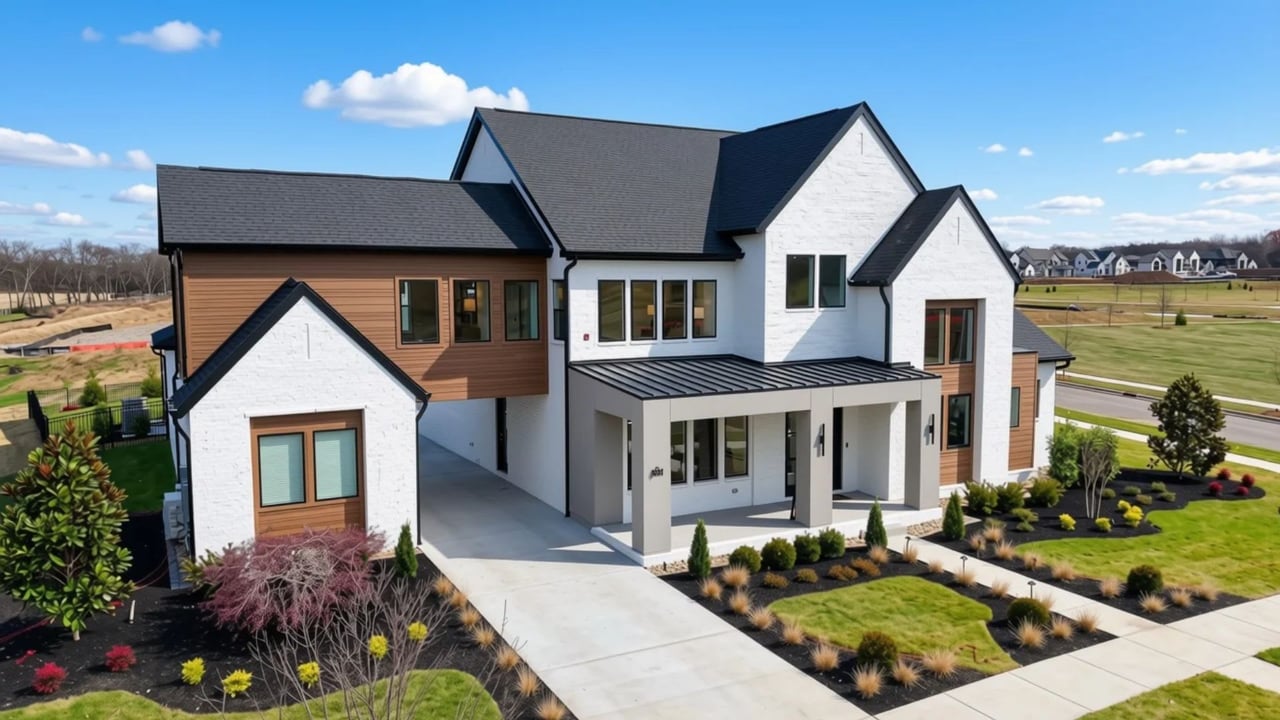
Another interesting finding from the November report involves newly constructed homes.
In September 2026, the national median price of a new home was $400,400, compared with $417,500 for existing homes.
That doesn't mean every new construction home is less expensive than a comparable resale property. The national figures reflect different groups of homes, which may vary in size, location, and features.
However, the data suggests that new construction deserves consideration.
Along the Gulf Coast, buyers may find opportunities in developing communities throughout Foley, Robertsdale, Daphne, Pace, Milton, and surrounding areas.
Depending on the builder and available inventory, some communities may offer incentives such as closing cost assistance, mortgage rate buydowns, or select upgrades.
These incentives can sometimes make a new home more financially attractive.
Still, it's important to compare the complete cost of ownership.
New construction may involve additional expenses for landscaping, fencing, appliances, window treatments, or upgrades that aren't included in the advertised starting price.
Before deciding between a newly built home and an existing property, compare the final purchase price, financing terms, taxes, insurance, association fees, and any expected additional expenses.
The Housing Market Is Different Across the Country
National statistics provide a useful overview, but regional differences remain significant.
According to NAR's September 2026 housing data, median existing-home prices varied considerably across the four major U.S. regions.
Region | Median Home Price | Annual Change |
|---|---|---|
Northeast | $523,600 | +4.7% |
Midwest | $329,600 | +3.1% |
South | $361,000 | +0.2% |
West | $613,600 | -0.3% |
The South experienced the smallest annual price increase outside the West, where the median price declined slightly.
Because Alabama and Florida are included in the Southern region, these figures offer some perspective on broader market conditions.
However, the South includes a wide range of cities and communities, and its regional median should not be mistaken for a Gulf Coast home price.
Coastal demand, second-home purchases, insurance expenses, tourism, and local employment patterns can all influence real estate activity in our area.
A home in downtown Pensacola, a golf course property in Gulf Shores, and a waterfront residence on Ono Island may each respond differently to the same national market conditions.
First-Time Homebuyers Continue to Face Challenges
One of the most revealing trends in the latest housing data is the changing profile of first-time buyers.
According to NAR's 2026 Profile of Home Buyers and Sellers, first-time buyers accounted for just 22% of home purchases.
Historically, before 2008, first-time buyers typically represented around 40% of transactions.
The median age of first-time homebuyers has also reached 40 years old.
These numbers highlight how challenging it has become for many Americans to enter the housing market.
Higher home prices, mortgage rates, student loans, and everyday living expenses can make saving for a down payment difficult.
For prospective buyers on the Gulf Coast, this is a reminder that purchasing your first home may require flexibility.
That could mean considering a different neighborhood, exploring a smaller property, researching first-time buyer assistance programs, or adjusting your purchase timeline.
It's also important to remember that a 20% down payment isn't always required.
Depending on qualifications, buyers may have access to conventional loans with lower down payment requirements, FHA financing, VA loans, or USDA loan programs.
Speaking with a qualified lender early in the process can help you understand which options may be available.
What Does the November 2026 Housing Market Mean for Sellers?
If you're considering selling your home along the Gulf Coast, the biggest takeaway from the latest report is that pricing and presentation matter.
Today's buyers have more options and are paying closer attention to value.
That doesn't mean homeowners can't achieve successful sales. It means the strategy used to attract buyers is becoming increasingly important.
Price Your Home Based on Current Market Conditions
One of the most common mistakes sellers can make is relying on what a neighboring property sold for during a much hotter market.
While past sales provide valuable information, market conditions can change.
An effective listing strategy should consider recent comparable sales, current competition, property condition, and buyer demand.
Starting with an unrealistic asking price may result in fewer showings, extended time on the market, and eventually a price reduction.
Make a Strong First Impression
When buyers have multiple properties to choose from, presentation can influence which homes receive attention.
Professional photography, clean and inviting interiors, updated landscaping, and accurate property descriptions can help your listing stand out.
This is especially important for out-of-state buyers who may be researching Gulf Coast homes online before scheduling an in-person visit.
Be Prepared to Negotiate
Negotiation doesn't always mean dramatically lowering your asking price.
Depending on the circumstances, buyers may request assistance with closing costs, inspection-related repairs, or other contract terms.
A thoughtful negotiation strategy considers the full transaction rather than focusing only on the final sale price.
The goal is to reach an agreement that works for both parties while protecting your priorities as a seller.
What Does the Market Mean for Buyers?
For buyers, the current environment offers a combination of opportunities and challenges.
Higher mortgage rates remain a significant affordability concern, but increased inventory and more frequent price adjustments may provide additional flexibility.
Before purchasing, it's important to:
- Understand your complete monthly housing budget, including insurance, taxes, and association fees.
- Get preapproved and compare financing options from multiple lenders.
- Research neighborhoods beyond the most popular coastal locations.
- Compare new construction incentives with existing-home opportunities.
- Evaluate the property's condition and potential maintenance expenses.
- Review local comparable sales before making an offer.
Most importantly, avoid making a major financial decision based entirely on predictions about future mortgage rates or home prices.
The right home should make sense for your lifestyle and financial goals under the circumstances you can reasonably plan for today.
What to Expect as the Gulf Coast Housing Market Moves Toward 2027
As 2026 comes to a close, buyers and sellers will likely continue watching mortgage rates, housing inventory, and affordability closely.
If inventory continues increasing while buyer demand remains subdued, some markets could experience additional pricing pressure.
If mortgage rates decline and more buyers return, competition may increase for desirable properties.
Neither outcome is guaranteed.
For the Alabama and Florida Gulf Coast, seasonal patterns add another layer to the picture.
Some buyers are preparing for retirement or relocation, while others are evaluating vacation properties, investment opportunities, or homes they hope to purchase before the next summer season.
These different types of demand can influence how individual neighborhoods and property categories perform.
Rather than trying to predict exactly what the market will do next, buyers and sellers are often better served by understanding what's happening in their specific community.
Thinking About Buying or Selling on the Gulf Coast?
The November 2026 housing market reflects a period of adjustment.
Home prices are still rising modestly at the national level, but sales have slowed, inventory is improving, and buyers are becoming more selective.
For buyers, this may create opportunities to explore a wider range of homes and negotiate more confidently.
For sellers, it reinforces the importance of competitive pricing, effective marketing, and understanding current local conditions.
Whether you're searching for a new home in Foley, considering selling a condo in Orange Beach, relocating to Pensacola, or exploring waterfront property in Perdido Key, every real estate decision deserves a strategy based on the local market.
The Coate Connection Team at RE/MAX Gulf Properties is here to help you understand your options and make informed decisions.
With more than 25 years of experience serving the Alabama and Florida Gulf Coast, our team understands the neighborhoods, property types, and market conditions that make this region unique.
David Coate: 251-572-9636
Virginia Coate: 251-260-3876
Website: https://coateconnection.com/
Source: RE/MAX, "State of the U.S. Housing Market: November 2026," published November 12, 2026. Statistics are based on reporting from the National Association of REALTORS®, Freddie Mac, Realtor.com, the U.S. Census Bureau, and other housing industry sources.
National housing data does not necessarily reflect conditions in individual Gulf Coast communities. Market information is subject to revision, and mortgage rates and financing requirements vary by lender and borrower.